The snare drum as a circular membrane instrument
All drums are circular membrane instruments, and we need to fully understand what that means, in comparison to a string instrument, for example.
A guitar is a string instrument, and each string has one tuning peg to tune the string to the perfect frequency. Then it needs either an electronic system or an acoustic body to produce enough volume to make it heard in the room.
The circular membrane of a drum needs to be tensioned with equal pressure all around the perimeter of it in order to be tuned to a pitch and produce an even sound across the surface of the head.
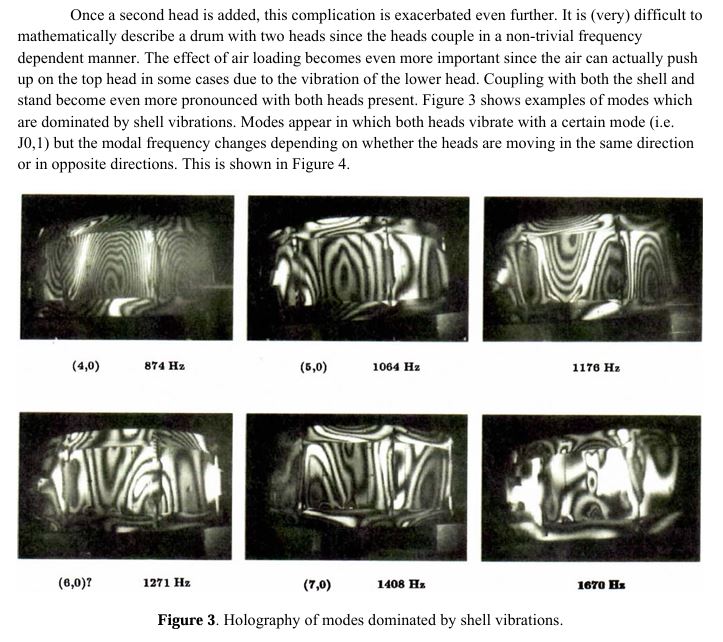
Fisher’s study from 2014, Modal Analysis of a Snare Drum, tells us that a circular membrane instrument is virtually impossible to tune (perfectly), and that every part of a modern (conventional) drum causes distortion to the head. In short: after ‘tuning’ the batter head, adding the second head, the first head gets distorted. The wires and the stand also affect the head’s frequencies. This means that every time you do something to the drum, you have to ‘fix’ the tuning again.
This cycle never ends. We stop at “good enough” not because we lack skill, but because the instrument itself refuses perfection.
The First Drums Were Free‑Floating.
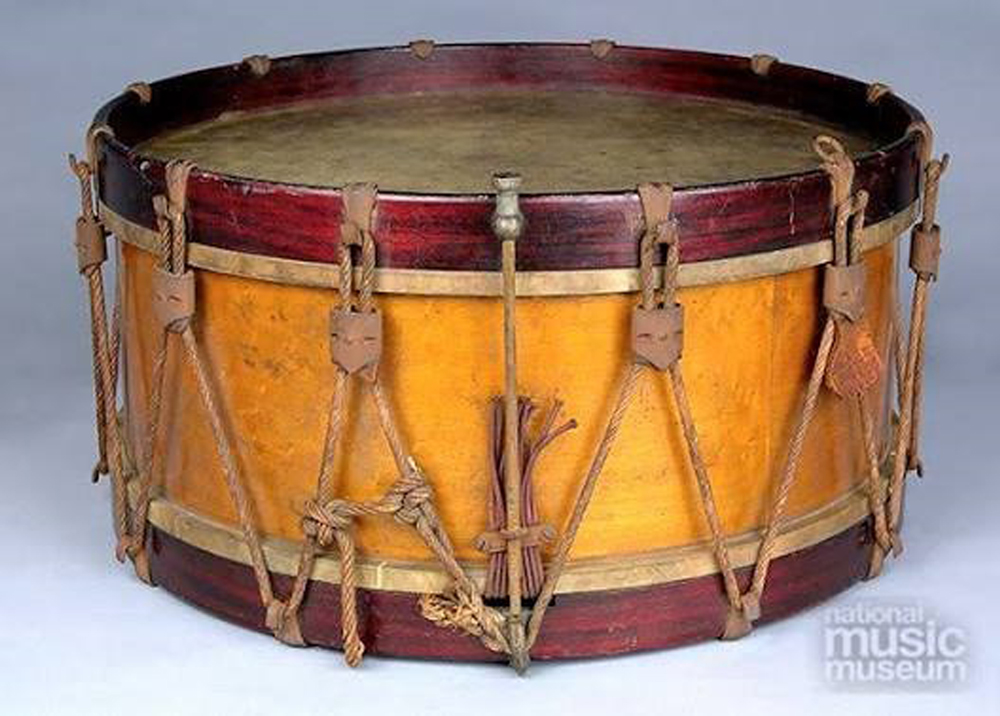
The fact that a circular membrane instrument must be tensioned evenly across the head was understood from the very first drum, using what we now call the ‘Welsh Tuning System’. Two hoops connected by a single rope that wrapped around the drum. When you tightened the rope, the tension distributed itself evenly across both heads.
The hoops floated.
The shell was free. Micro‑errors were absorbed automatically
The system worked because it respected the physics of a circular membrane
Modern design made it worse, not better
Modern engineering lets us apply higher tension to the head than the Welsh tuning system. Unfortunately, the invention of the modern tension lug only gives us disadvantages.
Each lug bolts into the shell, adding metal mass that distorts the head. Each lug creates its own tension zone. Each lug fights against the others. And because the lugs are fixed to the shell, the shell itself becomes part of the problem.
Micro‑errors multiply.
Top and bottom heads now have to be tuned separately.
Every adjustment affects everything else.
This is true for every conventional snare drum ever made, cheap or expensive.
A well‑built drum is only more forgiving, not less flawed.
There are a lot of stories about band-aid solutions like loosening a few rods, gel, tape, and who knows what more. They are even used by the big names in drumming and recording.
These stories only confirm that the snare is a problem instrument; it is not a confirmation that the most recorded snare is the best in the world and that we all need to have one.
We are forced to tune top and bottom heads separately; we don’t ‘need’ to.
The only thing that ‘needs’ to be achieved is for the heads to be evenly tuned and the correlation between the top and bottom heads to be optimal to get that typical snare sound we all know. And that is achieved by the correct interval to produce a clean tone with maximum attack and minimum sustain.
A reminder:
– We tension the heads to produce sound.
– We tune the heads to produce a desired sound (sustain or attack)
– We tension the heads to reach a certain pitch
Before we do that, we need to keep an eye on the following:
– Use new heads for better results, and a damaged head has surface deformation, which makes tuning even more difficult.
– Check the collars of the heads to be even and straight
– Check the hoops for flatness
– Check the shell for level bearing edges
– Check the bearing edges for damages
– Check the snare beds (deep or shallow?)
– Check the snare wires for damage and wear and tear.
Then we set it up correctly:
– Place the heads level on the shell
– Place the hoops level on the heads
– Make sure you evenly tighten every rod
– Tune up, rather than tune down.
– No matter what pitch you want, make sure all wrinkles are out of the heads
– Tighten both heads together, rather than fully tighten one head without the second head in place
When we talk about tension, remember this:
Same tension with the same two heads = sustain
Different tension with the same two heads = attack
Same tension with different heads = attack
What goes for one drum goes for all drums, and that is that the drum can only be tuned for sustain or for attack. We can never tune to have both (Bob Gadzen video about tuning)
-If you want sustain, you tune both heads at the same pitch
-If you want attack, you tune both heads at a different pitch, around a 3rd or 4th interval
Use different thicknesses of heads that fit the pitch you want; for example, a thick (low pitch) head for the batter, and a thin (high pitch) head for the resonance side.
Just as a guitarist uses thinner strings for the higher-pitched part and thicker strings for the lower-pitched part of the instrument.
Using the opposite of this makes no logical sense and should be avoided at all times.
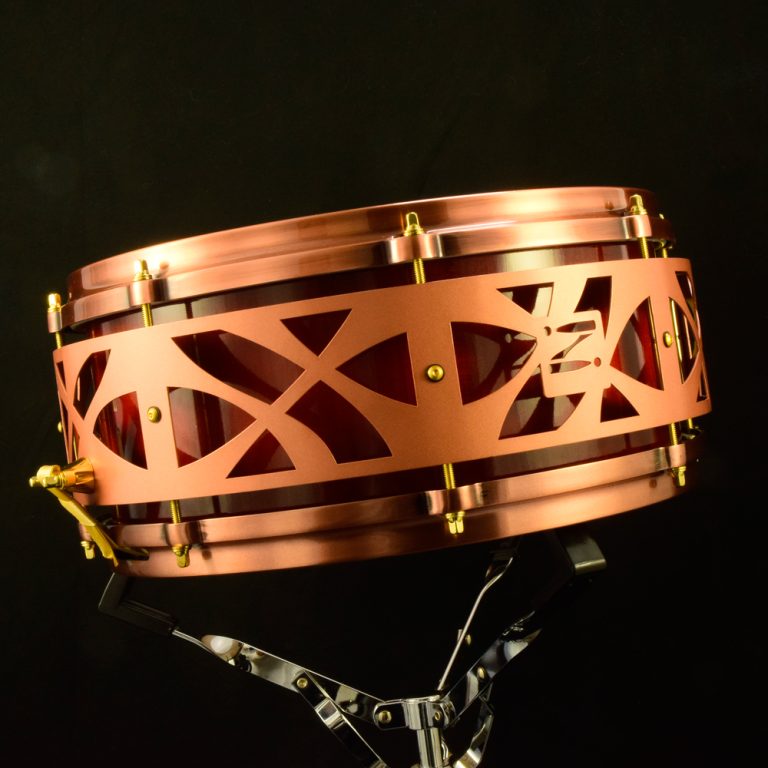
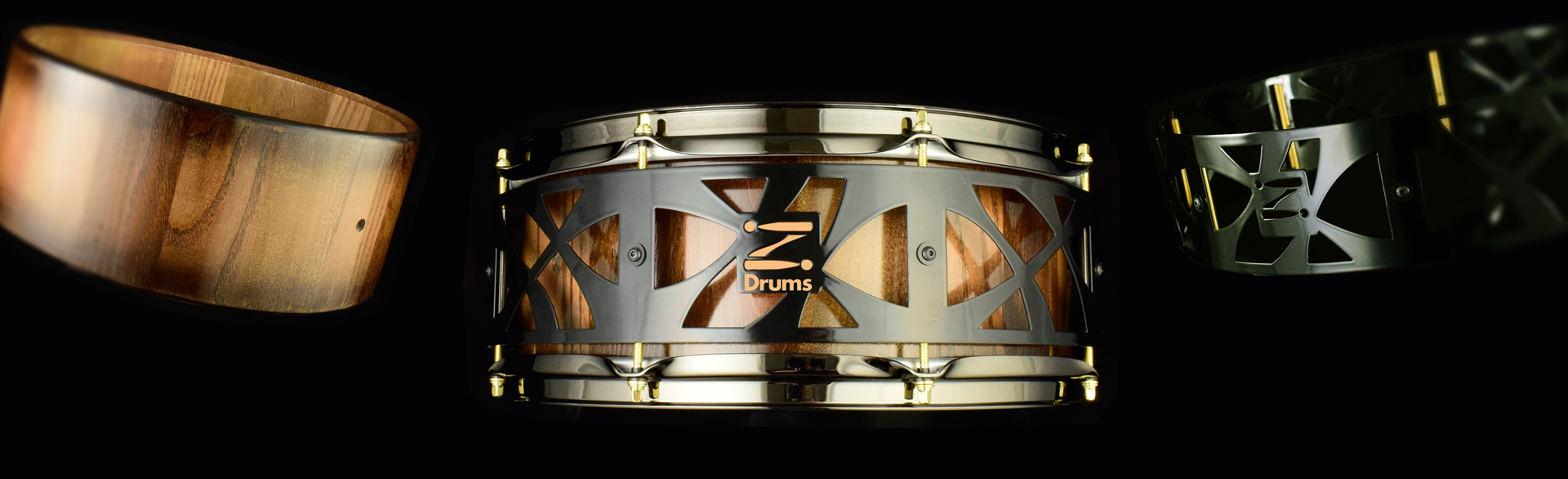
The Z-Drums hardware ring solves problems
Because a snare drum is packed full of inherent problems and even contradictory elements, we want to make it as simple and easy as possible to make it sound great, not just good enough.
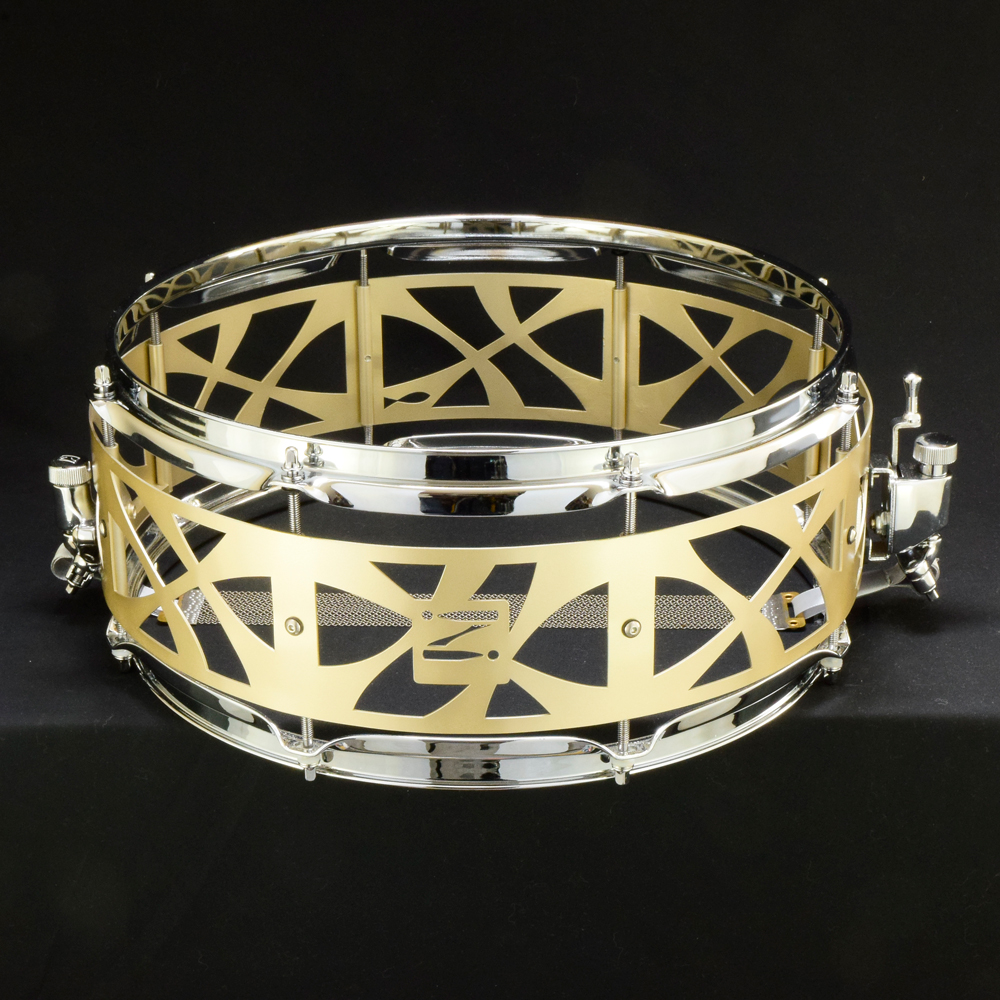
By freeing up the tension lugs and connecting the top and bottom hoops, we are no longer forced to tune the top and bottom heads separately.
This system spreads the tension over both heads at the same time, eliminating the problem of micro and macro tuning errors.
The heads correlate better (perfectly) to each other, and will sit at their natural tension required to produce the maximum attack (unless both heads are the same).
Call it ‘auto-tuning’
A better, more perfectly tuned snare only has musical tones, overtones and sustain (ring), and will also make the rest of the drum set sound better. Plus, the rest of the drum set will not audibly affect the snare in a negative way.
The Z-Drums tuning system also has the following advantages over a conventional snare:
– Head changes are easy, and no need to remove the wires.
– Shell changes are just as easy, making it a very versatile instrument
– The type of hardware used (strainer/trow off) does not affect the overall sound of the snare
– Because of a fully free-floating system, you will hear the natural timbre of the shell, either the wood type or metal used
– Quick and easy tuning without the need for tuning devices; you can tune on the spot
– Near-perfect tuning at every pitch, no need for micro-adjustment at both heads.
Why Free‑Floating Snares Sound Better
Cleaner Attack
No hardware interrupts the initial strike.
More Projection
The shell contributes fully to the sound.
More Stable Tuning
Even tension reduces chaotic modal interactions.
Fewer Unwanted Overtones
Removing shell‑mounted hardware reduces frequency distortion.
Greater Dynamic Range
The drum responds more sensitively to soft and loud playing.
These improvements are not subjective; they are predicted by membrane physics.
Arguments:
“I want/need to be able to tune the heads separately”
We don’t ‘need’ to tune the heads separately; we are forced to do so.
The snare (drum) itself only asks for the correct tuning and correlation between the heads to sound great/propper/in tune/have the desired sound.
It is the micro adjustments that make the drum sound either good or bad. (overtones)
It is the macro adjustments that determine the overall sound of the drum, including good or bad.
“It is a one-tension system”
By releasing the tune lugs from the shell and connecting the top and bottom lugs, you eliminate several inherited problems of a conventional snare drum:
– The hoop and head are not forced into multiple different tensions.
– The tune lugs are not fighting against micro errors in tuning.
– The micro and macro errors in tuning are not doubled by repeated tuning for both heads.
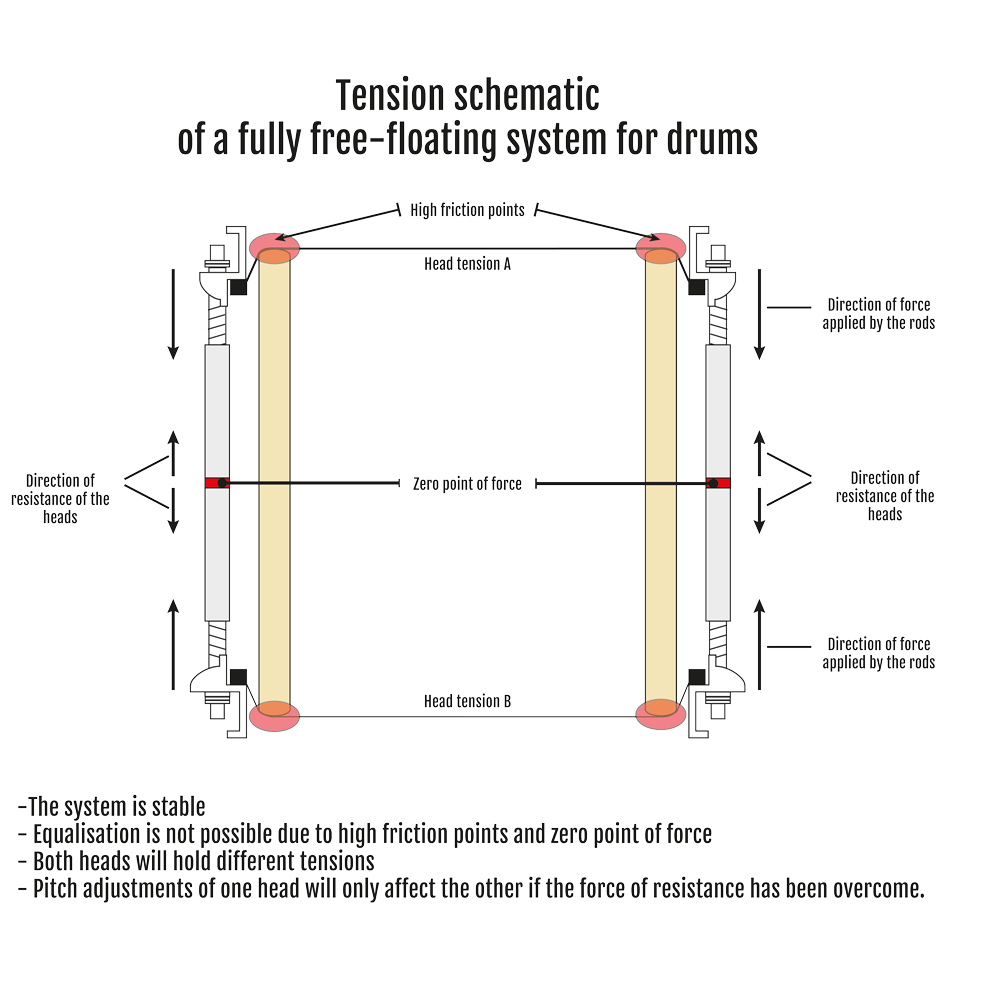
The laws of physics dictate that the forces that are pulling on the tube lug are cancelled out.
This means that the tension of each head is being retained.
If the laws of physics did not apply here, one head would have all the tension and the other would be slack.
One head is not winning over the other when it comes to the tension; it is like a tug of war between the two with the tube lug as the rope.
Adding the friction of the heads on the shell, and the fact that the opposite side of the head is also connected to the other head, makes this a very stable tension system that allows for different tension in both heads. At the same time, the tension is better divided over the heads, and the heads harmonise in a way separate ‘hand’ tuning cannot achieve.
Because of this, one head will not shift when the other is tightened or loosened unless it exceeds a certain amount of pressure. Small changes in tension of one head will not affect the other in any way.
Arguments:
“A fully free-floating snare has limitations”
What do you want to achieve with your drums, and specifically the snare drum?
With a fully free-floating system on a snare, you will have the same (similar) tension with different heads = attack.
When you achieve this with a fully free-floating system, what do you want to achieve after the snare is tuned to near perfection?
With a fully free-floating system, the heads will relate to each other in the best way that will produce maximum attack and minimum sustain.
This is without the aid of your ears or a tuning device, and without the need to tune every head separately, saving you a lot of time and effort.
A better, more perfectly tuned snare only has musical tones, overtones and sustain (ring), and will also make the rest of the drum set sound better. Plus, the rest of the drum set will not audibly negatively affect the snare.
“This sytem is a waste of money”
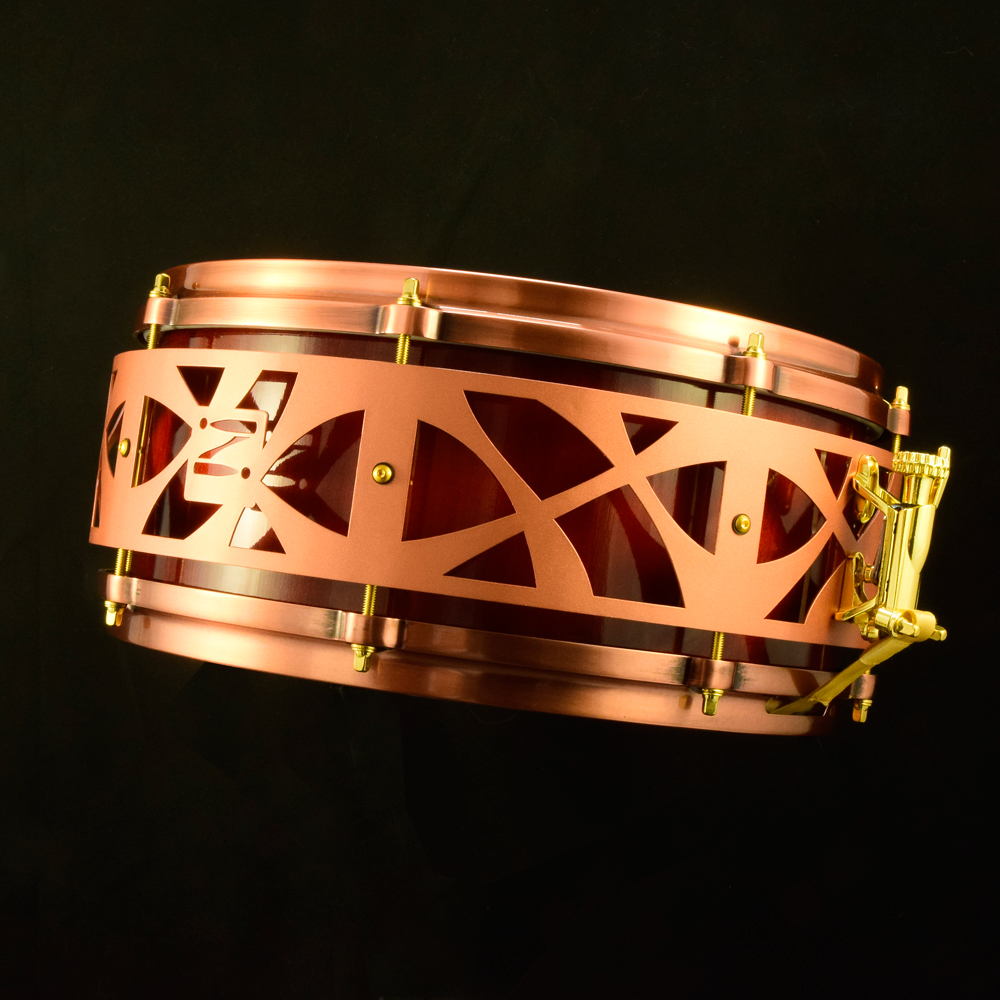
Compared to other systems, like the Pearl system, Z-Drums fully free-floating hardware ring does not use any bespoke-made parts.
The ring with just the simple tube lugs bolted to it costs the same as one highly engineered Pearl floating tube lug.
At the same time, the Z-Drums system has all the same attributes plus more over the Pearl system.
Pearl uses a cradle that holds the special tube lugs. The shell sits on the cradle, and only the batter head sits on the shell.
The resonance head is tensioned on the cradle and can be tuned separately from the batter head.
– This is a floating system because although the shell is free from any hardware, the cradle forms a separate (free-standing) drum and the heads are isolated because of this.
Z-Drums uses standard (simple) double-ended tube lugs that are fixed on the other ring, which also holds the hardware (strainer/trow and end-plate);
The shell sits freely between the heads. There are no other bespoke parts used. All the tube lugs form one solid tuning block that corrects any micro-tuning errors.
– This is a fully free-floating system because nothing is attached to the shell, and the heads (hoops) are connected to each other.
“The big companies know better”
The reason why the majority of drums are made in the conventional way is because of money and marketing.
The reason why we think that the conventional type drums must be the best is because of money and marketing.
A drum company will not make something out of the box unless they know it will sell enough, because it challenges tradition, requires education, and doesn’t fit the marketing narrative.
Conventional drums sell because they are familiar, not because they are better.
The benefits of stave drum shells
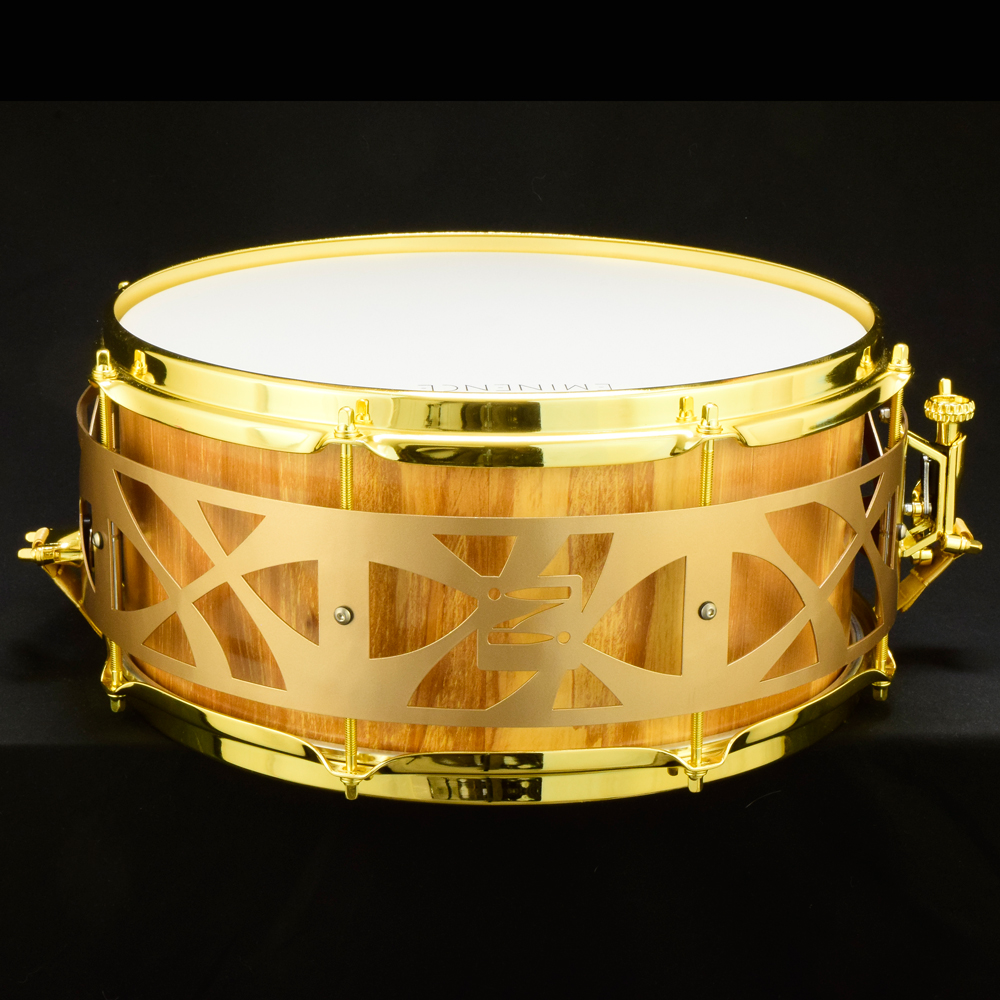
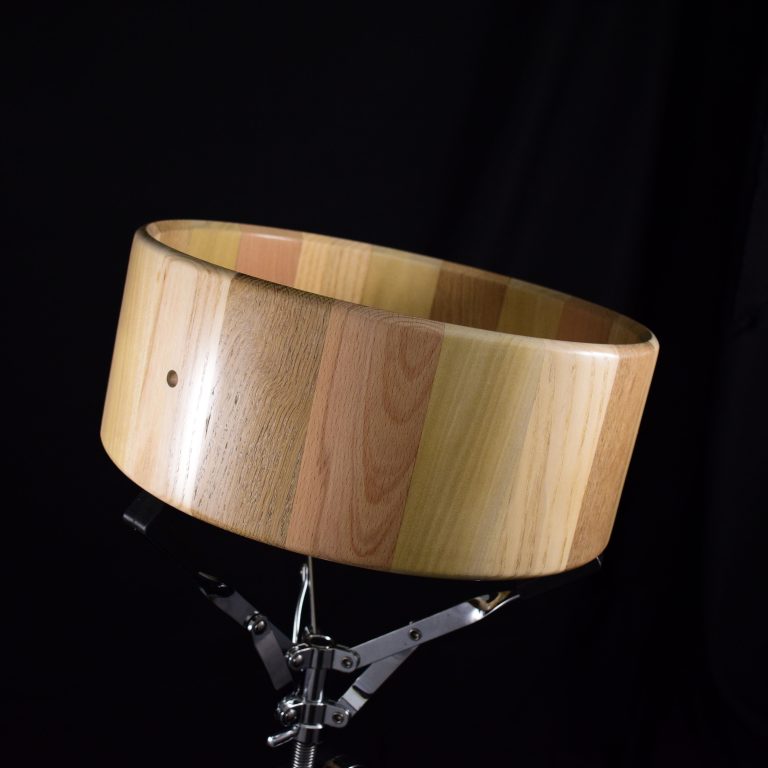
Stave drum shells are made of solid wood, compared to factory-made shells that are essentially plywood shells. A solid wood shell yields a purer frequency response and, because it is usually thicker, also produces a fatter, punchier sound. Because of the building process of stave drum shells, the amount of time it takes to make them and the cost of machinery and tools are lower than other types of shells. This gives you the advantage of owning a high-quality snare drum for a lower price than a factory-made snare.
Every shell is built from sustainably sourced wood, chosen for its unique tonal character. Here’s a quick guide to help you pick the right wood for your voice.
The shell vibrates in its natural pattern
Fischer (2014) showed that hardware induces modal distortion, twisting the shell’s vibration modes. Madsen (2016) found that hardware also adds damping, killing resonance early.
Remove the hardware influence, and the shell vibrates exactly the way the wood wants to.
This means Maple actually sounds like Maple. Walnut actually sounds like Walnut. Olivewood actually sounds like Olivewood. The wood’s voice becomes unmistakable.
Ash:
Punchy with excellent projection, EQ-ready and all frequencies evenly represented. Great for cutting through live mixes while still delivering a balanced tone.
Red Oak:
Strong and full-bodied with a warm, deep presence and a pronounced midrange, perfect for a powerful backbeat.
Cherry:
Smooth, warm, and musical with rich low-mids and a slightly softer attack, ideal for studio work and subtle playing styles.
Maple:
Open and versatile, with a slightly scooped midrange that lets both highs and lows shine. Bright overtones.
Spalted Maple:
Warmer than maple but with a slightly more complex, resonant character thanks to its unique grain, and visually stunning too.
Beech:
Classic and controlled with a focused, punchy tone, strong mids, and a dry, articulate response perfect for precise playing.
Alder:
Warm and rounded with a quick decay, giving you a smooth, vintage-inspired snare sound that blends beautifully in many styles.
The role of bearing edges and drumheads.
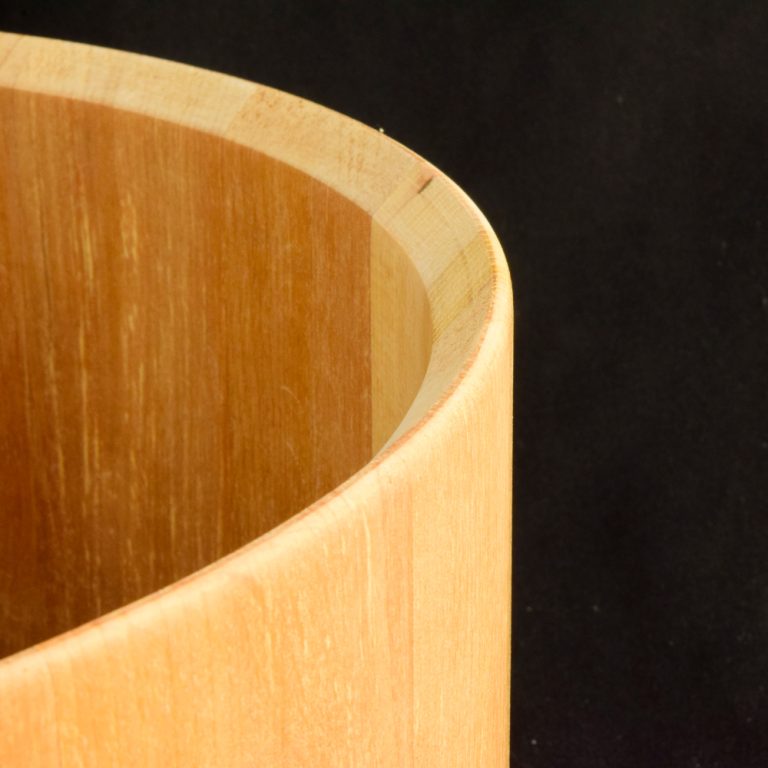
As for the bearing edges, the sole function of the bearing edge is to allow the heads to vibrate. And it is the heads that make the sound, not the shell. There are many possibilities for a snare drum; you can have a 14-inch, 13-inch, 12-inch, or even smaller or larger diameter. This is the main reason why one snare sounds different from another. So if you are looking for a 14-inch snare but also chasing a specific sound, you must think carefully about the depth of the shell.
45° Inside Cut (sharp inner apex)
Fast, articulate attack
Clear, forward midrange
More sensitivity and dynamic response
Brighter overall tone
Longer sustain
Great for modern, crisp snare voices
45° Outside Cut (sharp outer apex)
Warmer snare‑wire response
Softer attack
Slightly reduced brightness
More controlled decay
Smooth, musical snare articulation
Excellent for rounding off harshness
Rounded‑Over Edge (large radius)
Very warm, vintage‑leaning tone
Strong low‑mid body
Softened highs
Shorter sustain
More head‑to‑shell contact → natural damping
Great for fat backbeats and warm, dark snare voices
Small Round‑Over (1–3 mm)
Warms the tone without killing attack
Smooths high frequencies
Adds punchy low‑mid
Makes rimshots denser and less sharp
Excellent for “mix‑ready” snare behaviour
Flat Land (1–2 mm)
Stabilises the head seating
Adds punch and focus to the low‑mid
Reduces harshness from sharp edges
Makes tuning more predictable
Helps rimshots sound consistent around the drum
Baseball Bat Edge (full round‑over, no sharp apex)
Very warm, thick, vintage tone
Soft attack
Rolled‑off highs
Big low‑end, but slower response
Less articulation and sensitivity
Great for dark, fat, old‑school snare voices
Hybrid Edges (sharp on one side, round on the other)
45° Inside + Round‑Over Outside
Clear attack + warm body
Forward mids + smooth highs
Punchy low‑mid
Balanced modern/vintage feel
Excellent for expressive, mix‑ready snares
45° Outside + Round‑Over Inside
Warm wire response
Controlled decay
Softer attack
Smooth, musical snare tone
Great for taming brightness
Diameter vs. depth in real-world examples.
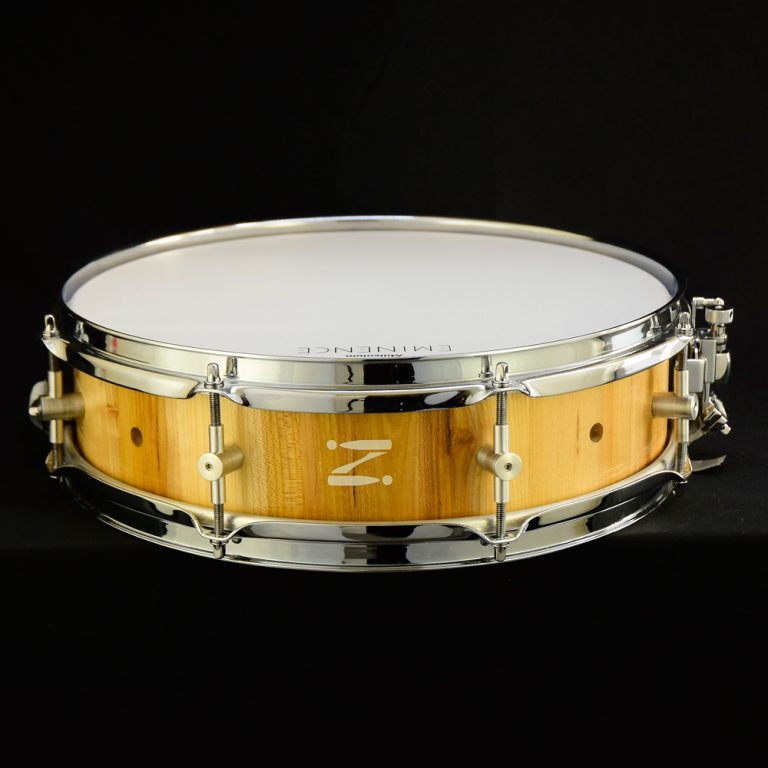
We all know that a piccolo snare has a snappy sound. But because it is still a 14-inch snare (if that’s the case), you will never get a distinctly different sound simply by changing materials or shell thickness. I have a Sonor SQ2 snare that is 12×6 inches, and a self-built piccolo that is 14×4 inches. The difference in sound between the two is huge, even though both are built to produce a snappy snare sound.
Because my fully free-floating system allows for shell changes only and uses the same hardware, I can accurately judge the difference in wood type and shell depth.
Choosing the right shell depth.
In conclusion, I can say that if you have a similar shell depth made from different types of wood, you will only hear a slight difference—and usually only after playing it for an extended period of time. But with shell depth, you will hear a clear difference straight away.
If you are not sure which depth would be best for you, please contact me at info@pascalzrour.com or call me on 0447 423 630 895.
Final Thoughts
The misconceptions people might have about this system, and questioning it might have limitations rooted in the inherent flaws of a conventional snare drum that we all became used to.
This turned into the belief that a conventional snare must be the best and only way of building one, and that there is no other, or better, way.
Fortunately for all of us drummers: There is!